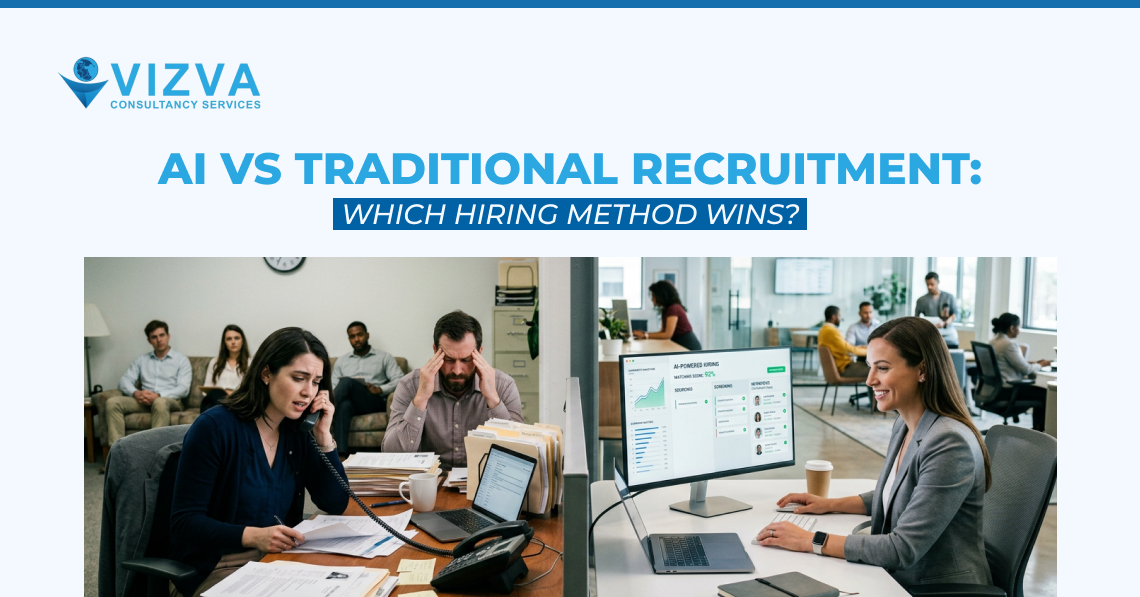
AI vs Traditional Recruiting: Which Works Better?
Can AI really replace human recruiters?
It’s a question many businesses are asking in 2026. With AI tools screening resumes, scheduling interviews, and even shortlisting candidates, hiring looks very different from what it used to be.
But at the same time, traditional recruitment is still alive. A good number of companies continue to count on their people’s judgment, experience, and social interaction to decide on the final hire.
So, what actually works better – AI-based hiring or traditional recruitment? In this blog, we’ll break it down in a simple way so you can understand what each approach offers and which one makes more sense for your hiring needs.
What Is AI-Based Hiring?
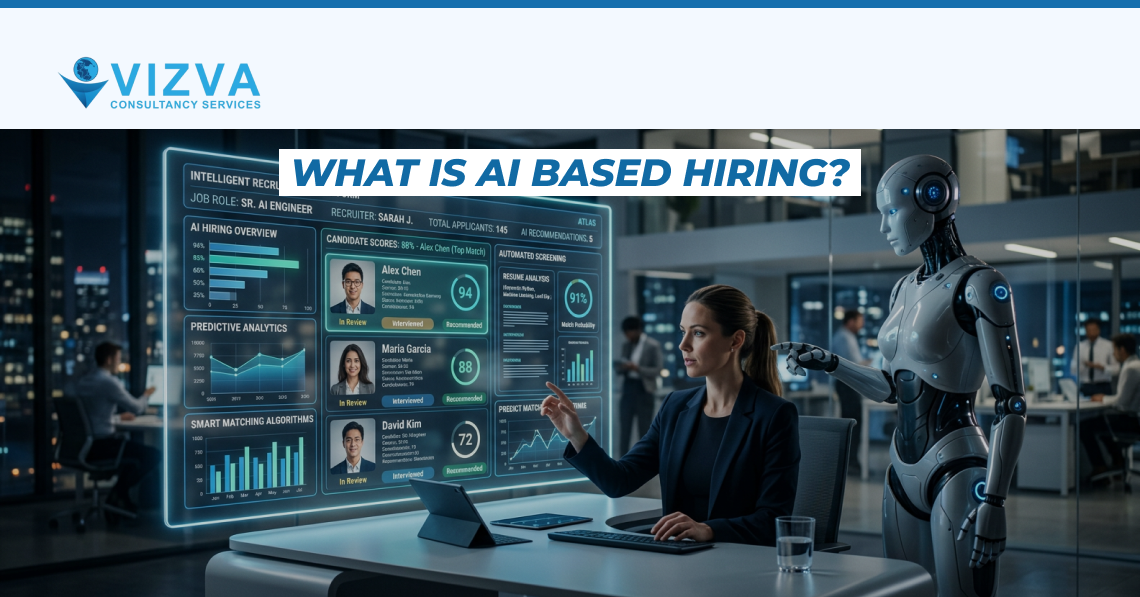
AI-based hiring refers to the use of software tools that not only help but also perform recruitment tasks automatically. Instead of handling everything by hand, companies use AI programs to review CVs, select candidates, and even set up meetings with them.
For example, AI can quickly scan hundreds of applications and pick candidates based on skills, experience, and keywords. This leads to time savings and allows recruiters to come into contact with the top candidates instead of reading through each resume.
But it’s important to understand that AI doesn’t fully replace humans. It assists the process by making it quicker and more productive, whereas humans are the ones who usually make the final calls. It assists the process by making it quicker and more productive, whereas humans are the ones who usually make the final calls.
Advantages and Disadvantages of AI-Based Hiring
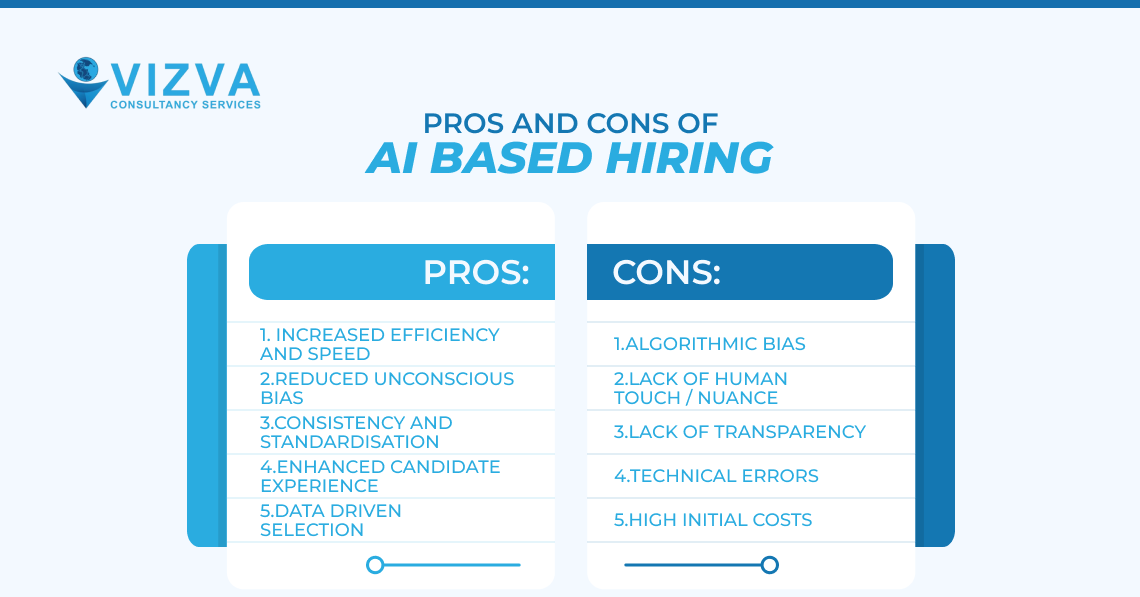
Advantages:
1. Increased Efficiency and Speed
AI has the capability of processing a large number of applications within a short period of time. It is capable of quickly identifying the best candidates from the resumes, which, ultimately, makes the hiring process more efficient.
2. Reduced Unconscious Bias
AI analyzes the qualifications and experience of the candidates in an objective way. This can help reduce human bias and make hiring decisions more fair.
3. Consistency and Standardisation
AI is programmed to execute the same sequence of actions for all candidates; it guarantees that each application will be examined in a uniform and orderly manner.
4. Enhanced Candidate Experience
AI tools can provide faster responses, updates, and interview scheduling. This improves the overall experience for candidates and keeps them engaged.
5. Data-Driven Selection
AI uses data and patterns to make decisions. Because of this, hiring managers cannot rely on their own “gut feeling” when making the choice of new employees.
Disadvantages:
1. Algorithmic Bias
If biased data are used as a basis for training AI, the outcomes will also be biased. This can result in the unfair exclusion of certain candidates.
2. Lack of Human Touch / Nuance
AI cannot fully understand emotions, personality, or cultural fit. These factors are often important when making final hiring decisions.
3. Lack of Transparency
AI decisions are not always easy to explain. It can be difficult to understand why certain candidates were selected or rejected.
4. Technical Errors
Similar to any other software, AI programs can suffer from technical problems or errors. These issues can affect the accuracy of the hiring process.
5. High Initial Costs
Implementing AI equipment and solutions requires substantial financial resources. Small businesses can struggle to afford high-end hiring technologies.
What Is Traditional Recruitment?
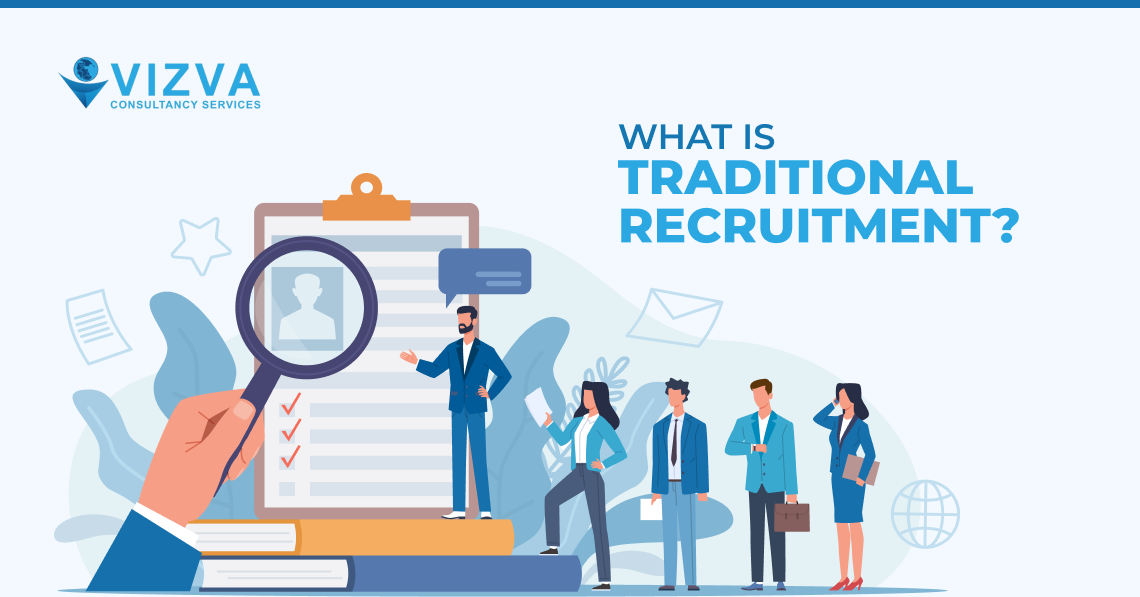
Traditional recruitment is a hiring process carried out by human beings. This involves advertising job openings, going through resumes, interviewing candidates, and selecting the best ones based on experience and human judgment.
Recruiters in this method manually sift through applications, have one-on-one conversations with candidates, and evaluate intangible qualities such as communication, attitude, and cultural fit. It’s a more hands-on and human-centric approach.
Despite being more time-consuming than AI-aided hiring, traditional recruitment gives you a chance to look deeper into candidates’ personalities and make decisions considering more than just skills and other measurable data.
Advantages and Disadvantages of Traditional Recruitment
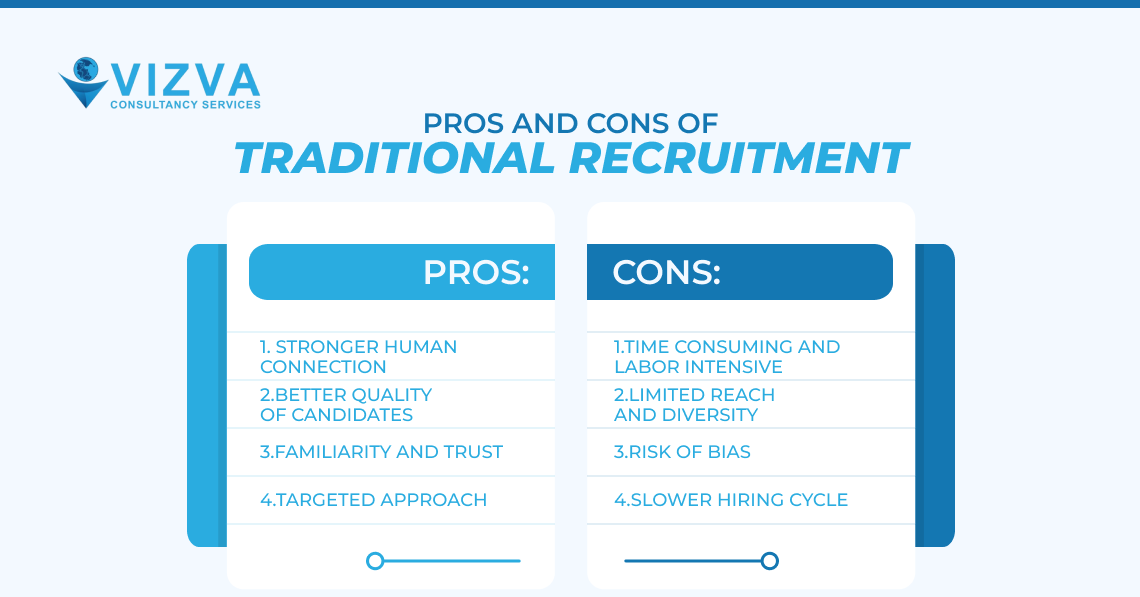
Advantages:
1. Stronger Human Connection
Traditional recruitment offers you face-to-face interaction with candidates. This not only gives you their attitude and communication styles but also allows for a better understanding of the overall suitability for the role.
2. Better Quality of Candidates
Recruiters can assess candidates beyond just resumes. They can evaluate attitude, behaviour, and real potential, which leads to better hiring decisions.
3. Familiarity and Trust
Many businesses are comfortable with this method because it’s been used for years. It helps build trust as it’s the experienced human recruiters making the decisions and not the systems.
4. Targeted Approach
It’s possible to concentrate only on those candidates who meet the key criteria for the role. Changes in the recruitment strategy can be driven by the requirements of the position and the needs of the business.
Disadvantages:
1. Time-Consuming and Labor Intensive
Manual processes slow things down in traditional hiring, as every step is done by hand, be it the screening of resumes or the scheduling of interviews.
2. Limited Reach and Diversity
Recruiters do not always reach a wide talent pool. This compromises diversity and decreases the chances of finding top-notch candidates.
3. Risk of Bias
Sometimes judgment can be affected by personal feelings, which can lead to favoritism and other types of unintentional bias in the hiring process.
4. Slower Hiring Cycle
Because the process is more detailed and manual, hiring takes longer. The result can be losing great candidates to companies that move faster.
Comparison Table: AI vs. Traditional Recruitment
Aspect | AI-Based Hiring | Traditional Recruitment |
Speed | Very fast, can screen large volumes quickly | Slower due to manual processes |
Efficiency | High efficiency with automation | Depends on the recruiter’s effort and time |
Human Interaction | Limited human involvement | Strong human interaction and personal touch |
Decision-Making | Based on data and algorithms | Based on experience and judgment |
Bias | Can reduce human bias, but has data bias | Higher risk of human bias |
Candidate Experience | Faster updates and communication | More personalised, but can be slower |
Flexibility | Follows fixed systems and criteria | More flexible and adaptable |
Cost | High initial setup, lower long-term cost | Higher cost per hire over time |
Accuracy | Data-driven, but depends on system quality | Depends on the recruiter’s skills and experience |
AI-Based Hiring OR Traditional Recruitment: Which One to Choose?
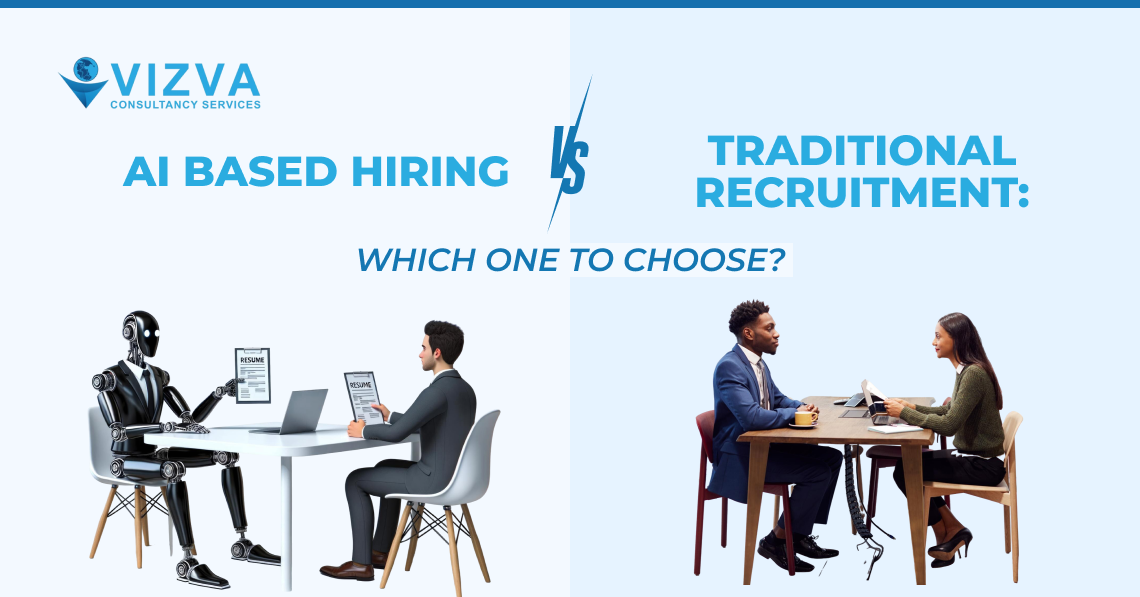
So, which one should you choose – AI-based hiring or traditional recruitment?
The honest answer is, it depends on what you need. If you want speed, efficiency, and handling of a huge number of applicants, then you are best off with AI-based recruitment. It is a time saver and also brings more systematization to the process.
But if your focus is on understanding candidates better, checking cultural fit, and making more personal decisions, traditional recruitment still plays a big role. There is human decision-making that AI is incapable of completely replacing.
Most likely, the future in 2026 will see more and more companies relying on a combination of the two approaches. Allow the AI part to take care of the running of the process, and the human part to oversee the final selection. This balance helps you hire faster while still choosing the right people.
Final Thought
Hiring in the year 2026 won’t be about opting either for AI or for humans. It is going to be all about how to deploy them together effectively.
If you go with just AI, you will lose the human element of hiring. And if you only rely on traditional ways, you may get stuck with slowness and a lack of efficiency. The real winner is the one who combines the two.
At Vizva Consultancy Services UK, this is the strategy that we have adopted as our guiding principle. Our Outsourcing Recruitment services, with the help of AI, enable us to give you human experts involved as well, so you get the best of both worlds.
See you in the next blog with more insights. Or maybe while you’re looking for the right hiring approach, we’ll be here to help you find it.
FAQs
Q- What is the meaning of AI hiring?
A- AI hiring means using artificial intelligence to support the recruitment process. It helps with tasks like screening resumes, shortlisting candidates, and scheduling interviews. The goal is to make hiring faster and more efficient.
Q- What is an AI hiring tool?
A- An AI hiring tool is software that uses data and algorithms to assist in recruitment. It can analyse resumes, match candidates to job roles, and automate communication. These tools help reduce manual work for recruiters.
Q- What is a traditional recruitment method?
A- Traditional recruitment is a manual hiring process handled by recruiters. It includes posting jobs, reviewing resumes, and conducting interviews based on experience and judgment. It focuses more on human interaction and evaluation.
Q- What is the difference between traditional and modern recruitment?
A- Traditional recruitment relies on manual processes and human decision-making. Modern recruitment uses technology like AI to make hiring faster and more data-driven. Most companies today use a mix of both approaches.
Q- What are the three types of recruitment?
A- The three main types are internal recruitment, external recruitment, and third-party recruitment. Internal hiring focuses on existing employees, while external hiring brings in new candidates. Third-party recruitment involves agencies helping businesses find talent.
